Alpine Living: How Mountain Homes Have Changed
From rustic chalets to contemporary Alpine design: materials, atmospheres and new ways of imagining life in the mountains.
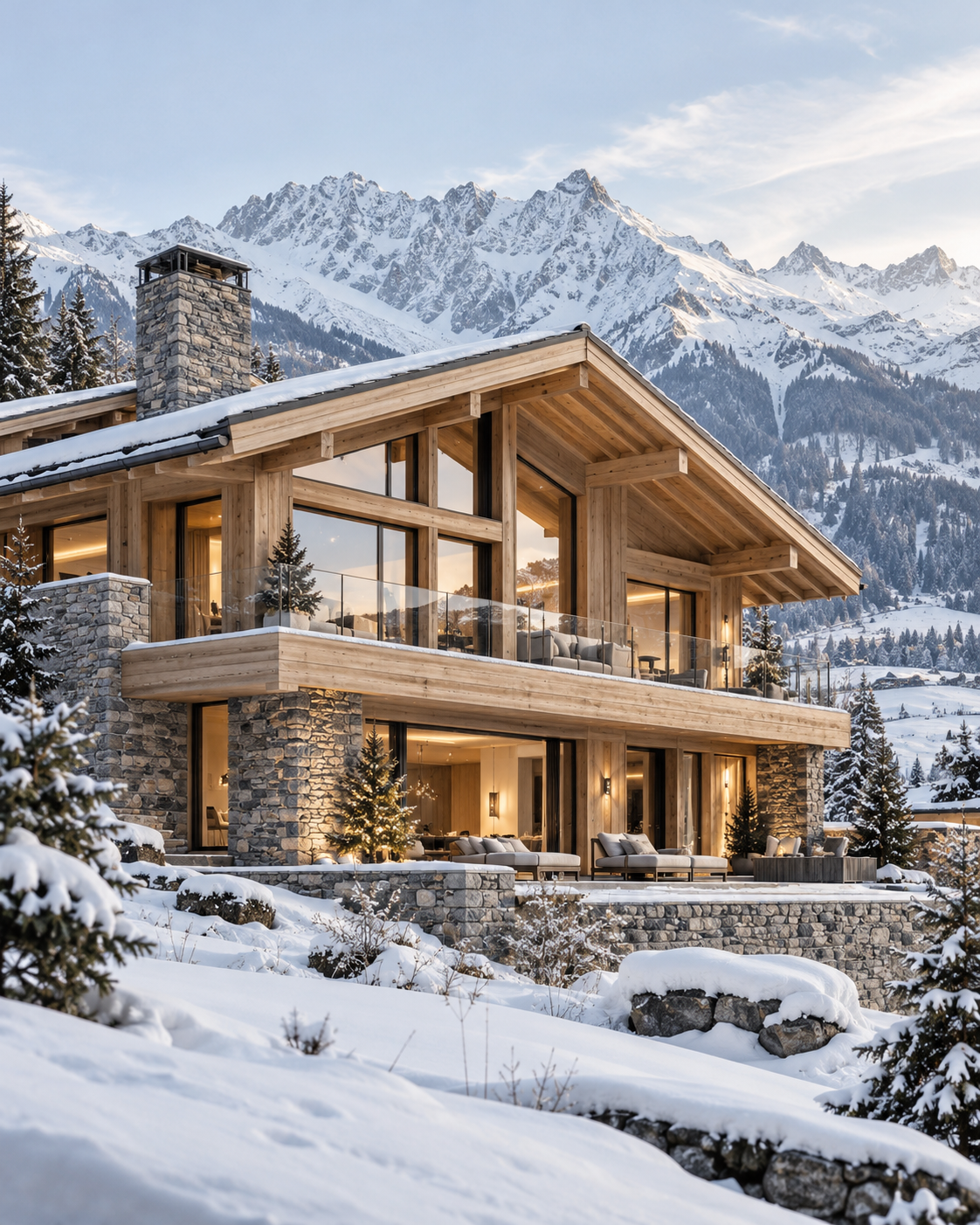
Mountain homes have always held a particular fascination. For decades, their aesthetic followed a familiar formula: dark wood, natural stone, warm textiles, traditional furniture and a large fireplace at the heart of the home. It was a comforting image, instantly associated with winter, intimacy and the idea of a cosy retreat. Today, however, the way we live in the mountains is changing — and so is our sense of style.
In recent years, a new interpretation of Alpine Living has emerged: more contemporary, brighter and increasingly understated. The mountain home is no longer simply a rustic hideaway for snowy weekends. It has become a more personal, versatile living space, often designed to be enjoyed throughout the year. This shift has transformed the language of Alpine interior design.
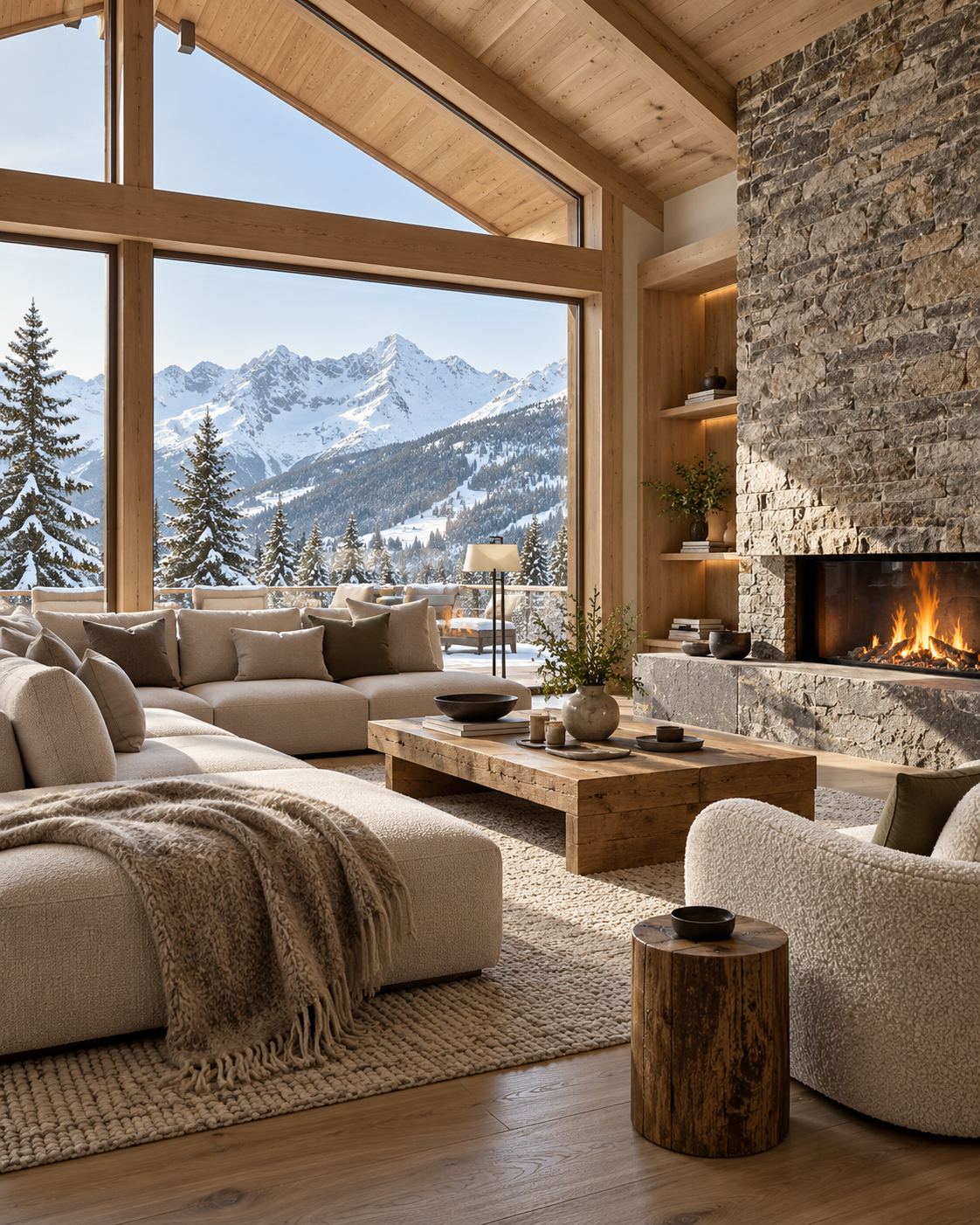
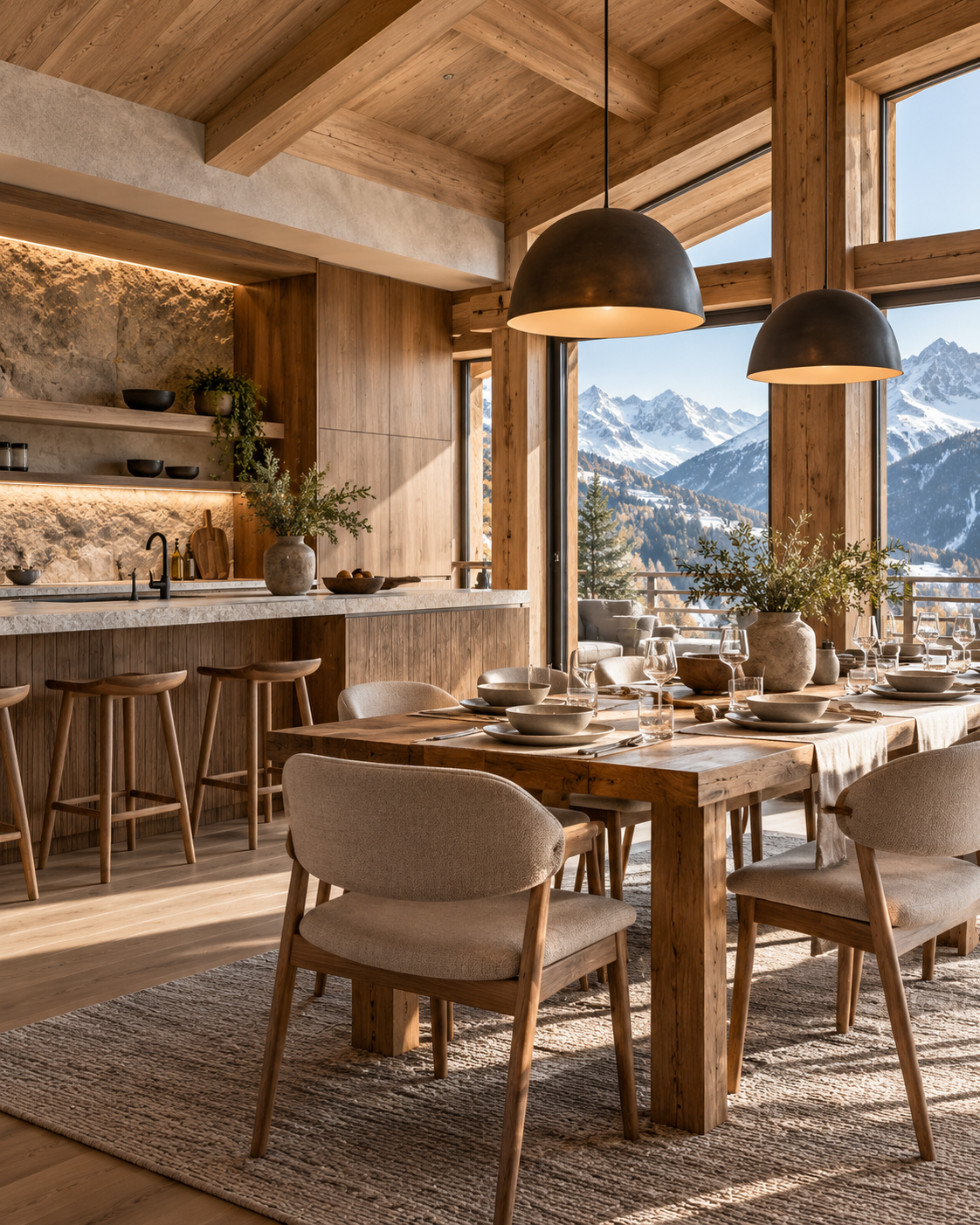
Wood remains central, but its character has evolved. Lighter tones replace darker finishes, natural textures meet cleaner surfaces, and decorative details give way to simpler lines. Traditional stone is now paired with matte metals, expansive glazing and more open architectural volumes. Colour palettes have become softer and more restrained: beige, warm grey, taupe, off-white and natural greens. The result preserves the welcoming warmth of a mountain home while expressing it through a distinctly contemporary aesthetic.
The idea is not to abandon tradition, but to reinterpret it. Contemporary Alpine interiors seek a balance between comfort, authenticity and simplicity. Rather than filling rooms with decorative objects, they focus on the quality of materials, natural light and the harmony of the spaces themselves. Even the meaning of luxury has changed. It is less about display and more about wellbeing: a thoughtfully designed, peaceful and functional environment where the greatest privilege is simply feeling at home.
This evolution has also transformed the relationship between architecture and landscape. Contemporary mountain homes increasingly seek a stronger connection with their surroundings through large windows, carefully framed views and visual continuity between interiors and the scenery outside. The mountains are no longer something to admire only from a distance; they become an essential part of the living experience. Natural light, snowy peaks, forests and seasonal changes all contribute to the atmosphere of the home.
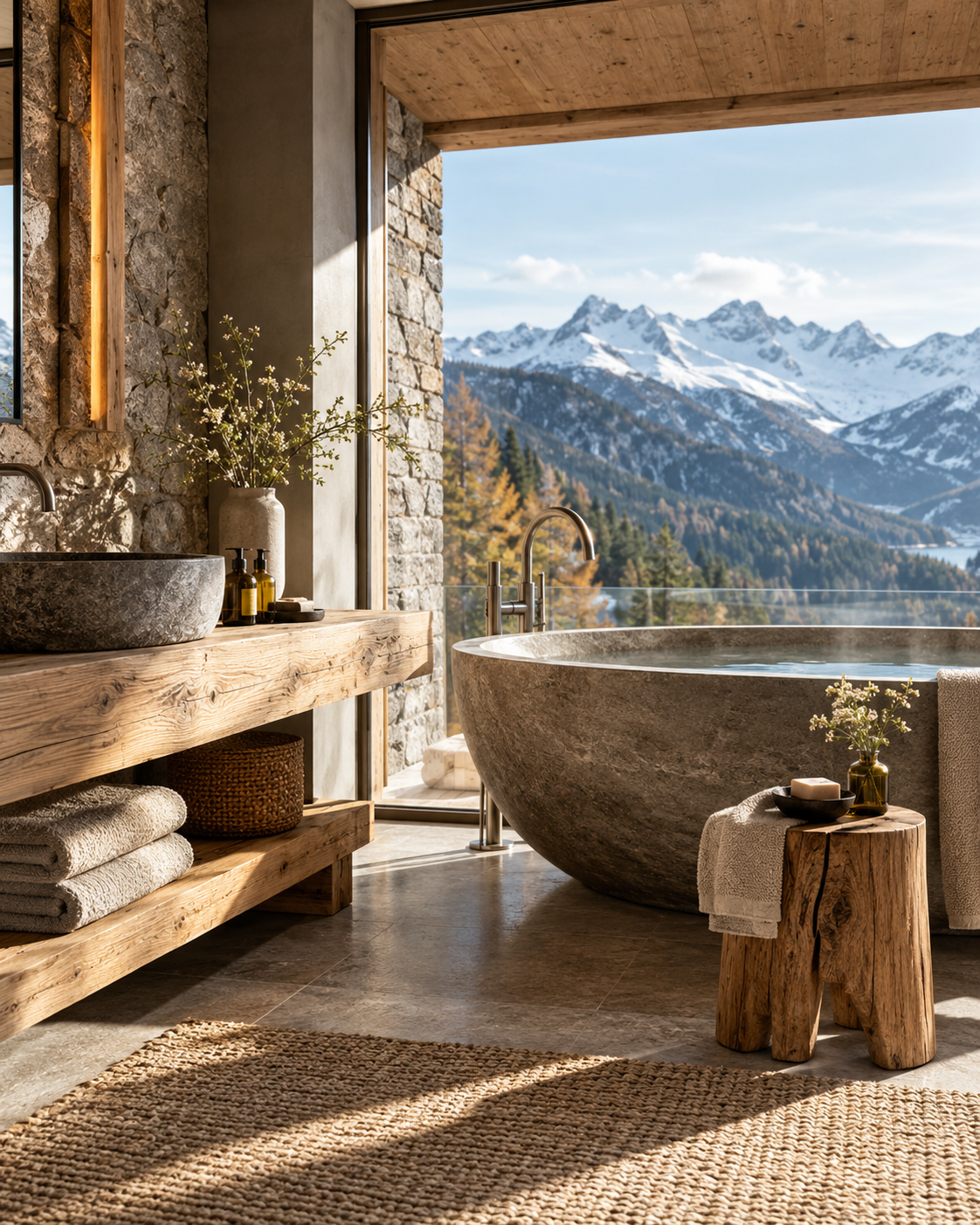
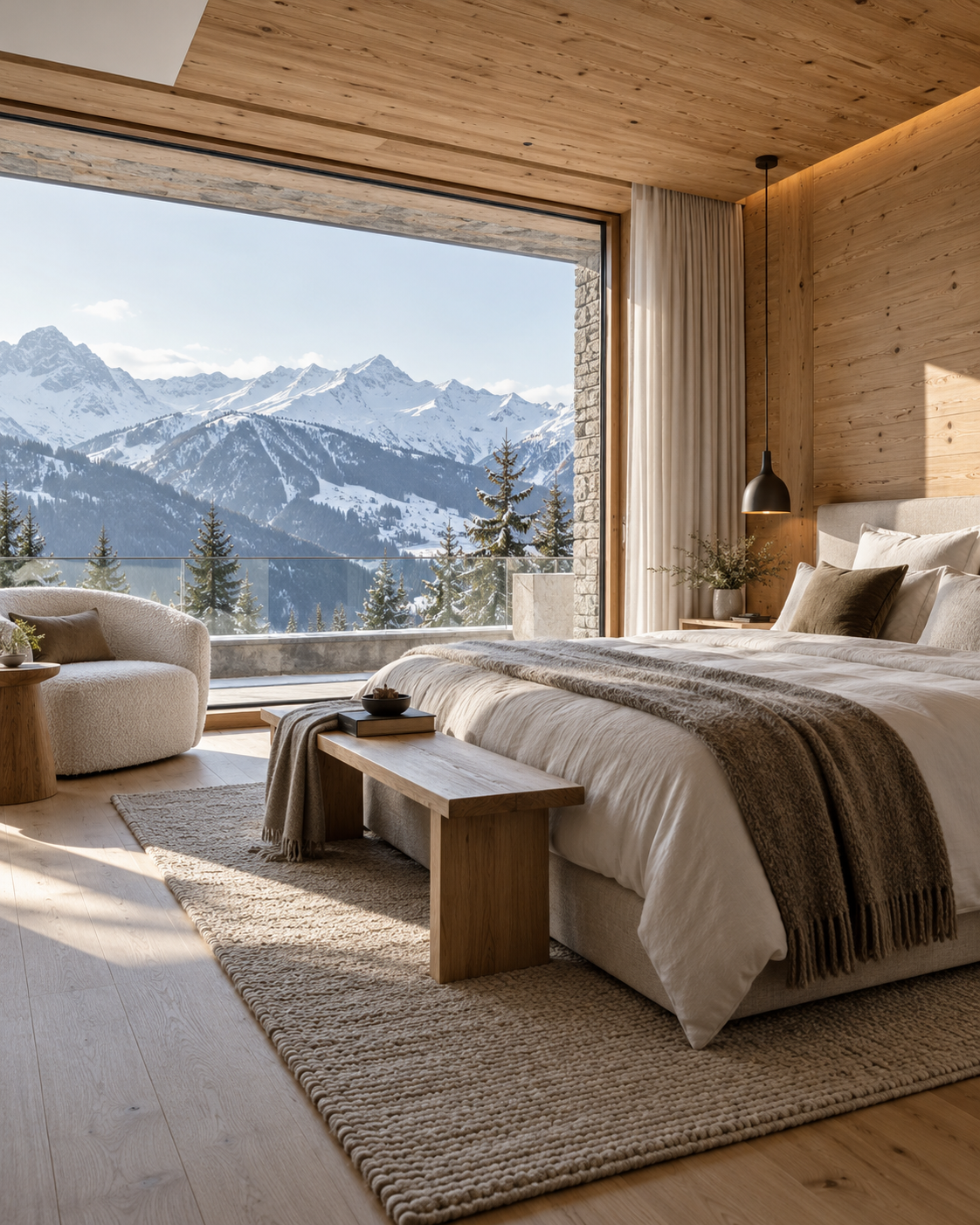
The way we use these spaces has changed as well. A mountain property is no longer merely somewhere to sleep after a day on the slopes. It is increasingly a place to work, entertain friends, enjoy longer stays and alternate outdoor activities with moments of relaxation. Interior design has responded accordingly: sociable kitchens, inviting reading corners, multifunctional spaces, less formal yet more comfortable bedrooms and bathrooms conceived as small personal wellness retreats.
Details play an important role in creating this atmosphere. A carefully chosen wool throw, a beautifully simple lamp, a natural wooden bench, handmade ceramics, black-and-white photography or objects that tell a personal story: contemporary Alpine style often emerges through a collection of subtle yet meaningful elements. The result is far from cold minimalism. Instead, it suggests a quiet elegance that feels warm, relaxed and immediately welcoming.
In a destination such as Limone Piemonte, this evolution is particularly interesting. Here, Alpine tradition coexists with a more contemporary sensibility, something that is increasingly reflected in the way mountain interiors are imagined. The mountain home no longer needs to rely on nostalgia or folklore. It can become a refined, modern living space while remaining deeply connected to its surroundings.
Ultimately, this transformation reflects a broader shift in what we expect from the places we inhabit: a desire for authenticity without compromising on quality, beauty or ease of living.
Today's Alpine Living is precisely that — a new way of understanding comfort, allowing the mountains to remain at the heart of the experience while expressing their character through a simpler, brighter and more contemporary design language.
Gallery